
Labour Early Prisoner Release Begins as Reform Warns of Crime Risk
Hundreds of prisoners are being released earlier from custody today as Labour’s new sentencing system comes into force, with Reform UK warning that the policy puts victims and the public at unnecessary risk.
The Government’s new prison-release arrangements began on 1 October as ministers attempt to deal with severe overcrowding across the prison estate.
Under the Sentencing Act 2026, some offenders serving Standard Determinate Sentences can now become eligible for release after serving a smaller proportion of their sentence in custody. For many eligible offenders, the minimum custodial period is reduced from 40 or 50 per cent to one third, while some more serious offenders move from two-thirds to one-half.
The Government says the changes are necessary to prevent prisons running out of capacity and insists that offenders released into the community will face tougher licence conditions, increased tagging and restrictions on where they can go. Ministers have committed £100 million towards expanded electronic monitoring and say probation services are receiving additional funding.
But Reform UK argues that reducing time spent behind bars is the wrong answer to a prison-capacity crisis that has been allowed to develop over many years.
Reform: There are alternatives to releasing prisoners early
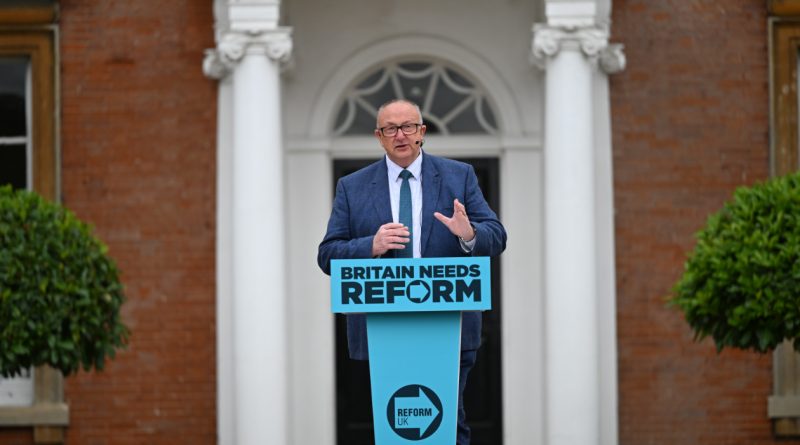
Reform UK National Policing and Crime Adviser Colin Sutton, a former senior Metropolitan Police detective who spent 30 years in policing, has warned that some offenders released early will inevitably reoffend.
Sutton argues that the Government should first be looking at ways to create additional prison capacity rather than reducing the amount of time offenders spend in custody.
Among the alternatives proposed by Reform are the removal of foreign national offenders from British prisons, agreements for offenders to serve sentences overseas and the rapid construction of temporary or modular “Nightingale prisons” on suitable Government or Ministry of Defence land.
Reform says its wider prison policy would aim to create around 22,000 additional places by 2031, including approximately 10,000 places freed by transferring foreign offenders out of the UK prison estate and around 12,000 new places through modular prisons.
Sutton has pointed to other European countries that already use overseas prison arrangements, including Denmark, Norway, Belgium and Sweden, arguing that Britain should examine similar options before shortening sentences.
His central argument is straightforward: a shortage of prison cells should not determine how long a criminal spends behind bars.
Prisoner thanks Burnham after leaving Brixton
The political controversy was underlined on the first morning of the new arrangements when GB News reported speaking to a prisoner leaving HMP Brixton who thanked Prime Minister Andy Burnham after his release.
According to the broadcaster, the man had been sentenced earlier this year for stealing cigarettes and said he had not been fitted with an electronic tag as he walked out of prison.
The Government says tagging is being expanded to record levels, but it does not claim that every person released will automatically receive an electronic tag. Its new system allows a range of licence conditions to be imposed according to the offender and the assessed risks involved.
For victims watching offenders leave prison earlier than the sentence originally appeared to suggest, however, those distinctions may provide little reassurance.
A prison crisis years in the making
There is no serious dispute that Britain has a prison-capacity problem.
The Government says the prison estate has been operating close to its limits and argues that without changes to sentencing and release arrangements there is a risk of the system simply running out of cells. Current guidance explicitly says the reforms are intended to ensure sufficient prison capacity while supervising offenders in the community.
Reform agrees that capacity is the problem but fundamentally disagrees with Labour over the solution.
Nigel Farage has also blamed successive Conservative and Labour governments for failing to build sufficient prison capacity while the population increased. Reform has previously criticised the Conservatives for using early-release measures of their own, arguing that the present crisis is the product of decisions made by both major parties.
That point matters.
This is not simply an argument about one Labour policy introduced today. It is about whether governments should respond to overcrowded prisons by shortening the period offenders spend inside, or by increasing the capacity available to keep them there.
Reform proposes a different approach
Reform UK says it would end early release for serious violent offenders, sexual offenders and those convicted of knife offences.
Its policy would instead focus on expanding prison capacity, transferring foreign criminals overseas and restoring shorter custodial sentences that Labour has sought to reduce.
Reform Shadow Home Secretary Zia Yusuf has said that under the party’s plans, serious violent and sexual offenders would serve their sentences without being released early because the prison estate happened to be full.
For local residents in Orpington and across Bromley, the debate ultimately comes back to something very basic: what should a prison sentence mean?
Labour argues that offenders can serve part of a sentence under strict supervision in the community while scarce prison places are concentrated on those considered most dangerous.
Reform argues that the better answer is to create more prison space and remove foreign offenders from the domestic prison estate rather than shorten custody for other criminals.
As the first prisoners leave under the new arrangements today, that division on law and order could hardly be clearer.